Exhibition
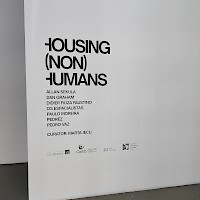
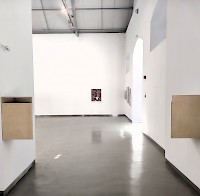
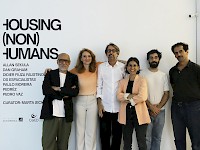
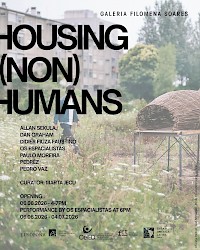
Housing (non) Humans
Group Exhibition
6 June – 4 July 2026
Galeria Filomena Soares, Lisbon
Artists:
Allan Sekula, Dan Graham, Didier Fiúza Faustino, Os Espacialistas, Paulo Moreira, Pedrêz, Pedro Vaz
Curator: Marta Jecu
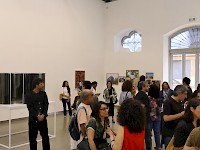
Opening Reception: 6 June 2026, 4pm - 7pm
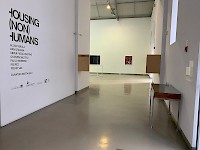
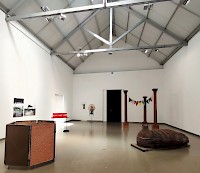
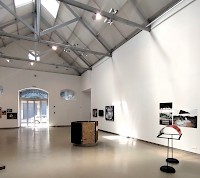
Housing Non Humans brings together seven international artists and architects whose practices engage with ecological relations through architecture, design, landscape, material research and social environments. The exhibition explores construction materials not simply as functional elements, but as living matter embedded within cultural, environmental and social systems. The participating practices approach architecture through artistic research on the properties of matter seen as an organism, investigating vernacular knowledge, collective memory, natural resources and the agency of matter itself. Human beings, built structures and natural materials are understood as interconnected in a natural flow. Across photography, installation, sculpture, film and architectural intervention, the exhibition proposes a vision of architecture that dissolves boundaries between art, design, environment and social practice, focused on the rights, the circuits, the habitat, the needs and the intrinsic energy of natural materials.
The exhibition maps forms of “living architecture” grounded in regeneration, coexistence and material intelligence – from a holistic perspective, based on historic practices, orally transmitted information, cultural traditions and imaginaries.
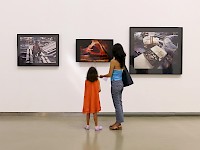
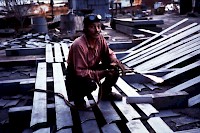
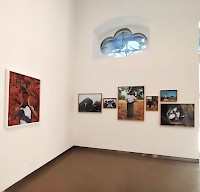
Allan Sekula (1951 – 2013) explored maritime economies, labour and ecological systems through photography, film and written pieces. His work examined the interconnections between global trade, migration and marine environments. The photographs presented in this exhibition document labour conditions in the port of Ensenada, Mexico, revealing the sea and its living beings, as bound to that of the migrant workers and the industrial infrastructures and architectures. His film Tsukiji (2001) follows a day in Tokyo’s fish market, portraying the different stages of the transformation of the natural life into commodity: From freezing to cutting up the fish and finally the sale.
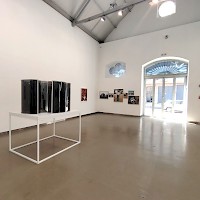
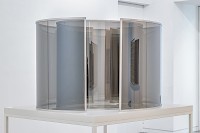
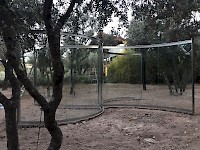
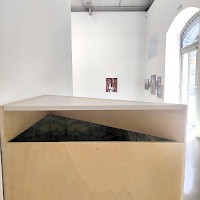
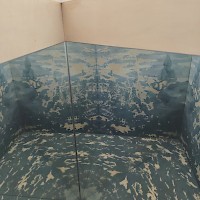
Dan Graham (1942 – 2022) consolidated photography as a medium of exploration of social aspects of architecture and urbanism, similar to Allan Sekula. His work expanded the field of the American conceptual art scene of the 1960s by investigating the psychological and social relationships between the viewer, public space and systems of perception, developing works that examined suburban architecture, consumer culture, surveillance, and media. His well-known glass pavilions — immersive environments meant to be placed in nature – question urban design and collective behaviour. They dissolve the limits of architecture into the infinity of nature, fusing organic and non-organic matter and promoting a human and natural contamination.
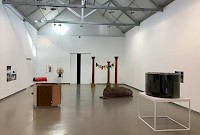
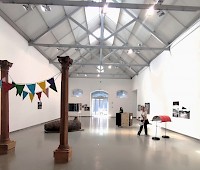
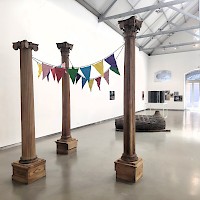
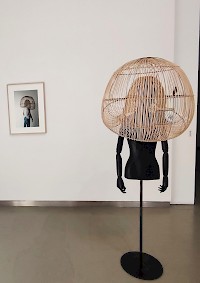
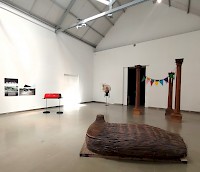
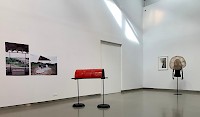
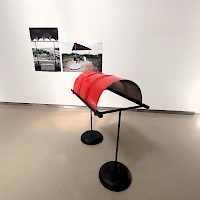
Didier Fiúza Faustino develops a multifaceted approach that defies conventions and traditions of representation. His hybrids, fusing mobile architectural elements, cross-temporal artefacts, inhabitable structures, and performative objects, explore the essence of our material culture. His objects can be understood as expressive archives, centred on survival, resistance, dwelling, sheltering. Canary in a Coal Mine (2026) depicts a man with a cage on his head containing a canary inside and is based on the vernacular belief among miners that a bird taken into the mine would warn them of the dangers of collapse. The human-bird figure becomes a pathfinder between the underworld and the terrestrial world, where humans and non-humans coexist and collaborate. 4 Columns (2026), composed of reclaimed wooden columns from a colonial house, displays the formal elements of an architecture of power and status adorned with colourful flags, symbols of their appropriation in popular festivities that suspend social conventions. It reflects on coexistence between human and non-human life, memory, decay and the transformation of architecture and its materiality through time and collective rituals.
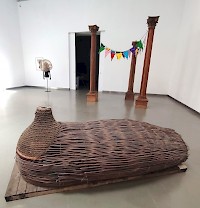
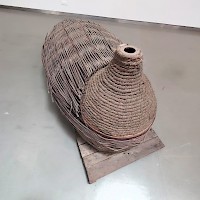
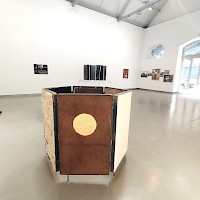
Pedrêz, founded in Porto by Matilde Cabral and Francisco Fonseca, operates across material research and systemic ecology, by developing regenerative building systems and low-processing natural materials. Architecture as a living system connected to cycles of regeneration, subsistence and territorial resilience, combins crafts with ecological experimentation. Políptico (2026) is an architectuiral prototype with innovative ecological building materials made of vegetable charcoal, hemp, algae, beeswax, sheep’s wool and animal manure. Gat Shmanim (2018), a sarcophagus with the interior of the head lined with beeswax, invites the human to enter for regenrating himself. The work addresses the tension between confinement and habitation, between dystopia and material intelligence.
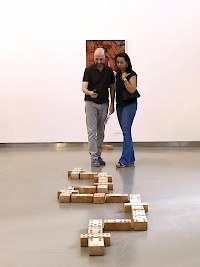
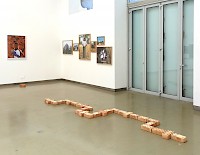
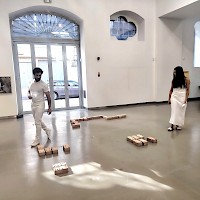
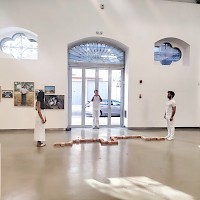
Os Espacialistas is a transdisciplinary team project working between contemporary art, architecture and education. Through photography, performance, installation and spatial intervention, they propose new ways of perceiving and inhabiting space. Replacing the traditional architectural drawing tool with the photographic camera, Os Espacialistas use image-making as a device for spatial diagnosis, operating between documentation and fiction. Os Espacialistas present a selection of photographic works and a performance where architecture, the body and vegetal and mineral entities flow into one another, highlighting their ongoing investigation into landscape and body architecture.
Paulo Moreira Architectures develops architectural and social intervention projects in contexts of urban conflict and social deprivation. Based in Porto, the studio works with recycled and locally sourced materials, engaging directly with communities in Portugal and Africa. The studio develops social support installations and community building and empowerment projects with long-term effects. Safety Shelters (2026), developed in the informal settlement of Stjwetla, Johannesburg, was built collaboratively using reclaimed and donated materials and function as a protection structure on key pedestrian routes vulnerable to crime and as a symbol of collective resilience and social exchange.
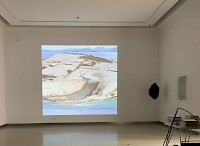
Pedro Vaz explores the experience of territory through painting, drawing, installation and video. Developed through expeditions and field research to isolated geographies in Amazonia, Himalayas and the Serra de Estrela, his work reflects on the tension between nature and representation, questioning the ways in which humans inhabit and imagine the natural world. His paintings frequently emerge from notebooks, photographs, collected materials and observations made in forests, deserts, volcanic regions, as an artistic and anthropological process. The video Laje Branca (2016), filmed across opposing views of an island landscape, and a two “landscape viewing devices” created at Pico do Refúgio, on São Miguel Island, Azores, question the very notion of landscape as a human construction that frames and controls the natural continuum.